Exploring the different types of puppets and their unique characteristics

At some point, many of us have played with action figures and dolls by making them move or talking to them. Or perhaps you have worn a mask, transforming into someone totally different from yourself?
This distinctive art form is known as puppetry, which dates back to between 30,000 and 20,000 B.C.E. Because it defies fixed definitions, puppetry is an ever evolving art form that encompasses a wide variety of techniques, styles and cultural influences.
By definition, "puppetry" means "the production or creation of puppets or puppet shows." A puppet is defined as "a small-scale figure (as of a person or animal) usually within a cloth body and hollow head that fits over and is moved by the hand."
Let's delve into the various types of puppets that exist today.
Sock puppet

As the name suggests, a sock puppet is simply a sock decorated to resemble characters, animals or even people. Because of the simplicity of this puppet, it makes a great activity for young children to enjoy. They can put on fun performances with their sock friends for the family to enjoy.
Ventriloquist's dummy
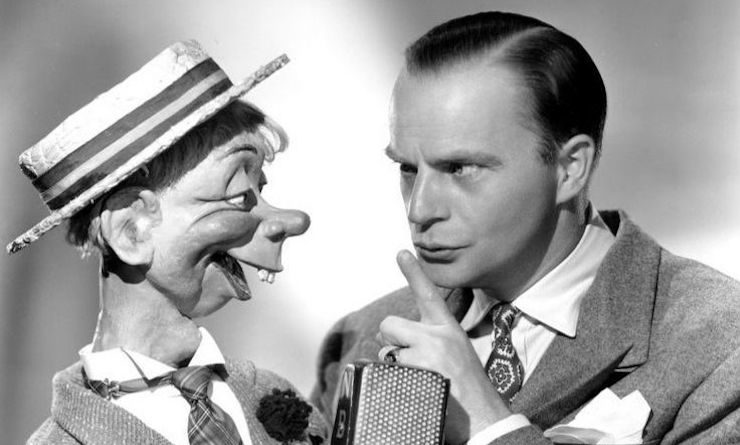
Ventriloquism is a specialized form of puppetry in which the puppeteer, called a ventriloquist, creates the impression that their voice is coming from a puppet. In other words, the audience assumes the puppet's voice is created by someone backstage.
While the dummies were made of hard wood in the past, soft dummies are also used these days. These are operated by a rod that runs from the back of the neck down to the body. Because these dummies are typically sat on the ventriloquist's knee, the ventriloquist is able to use his or her hand to discreetly operate it. The functions can include blinking the eyelids and moving the lower jaw.
A notable example is Edgar Bergen (pictured) and his two ventriloquist's dummies, Charlie McCarthy and Mortimer Snerd (pictured).
Finger puppet

Finger puppets are controlled by one or more fingers that occupy the interior of the puppet. They are usually simple, consisting of a sheath that the puppeteer inserts either one or two fingers into. While movements are limited, multiple finger puppets can be controlled at one time. Making finger puppets is another common craft for children and are typically sold in sets.
Hand/glove puppet

These puppets have a hollow cloth body that fits over the puppeteer's hand. The fingers fit into the head and arms, which make the puppet move. Individual movements are very limited, given the full use of the puppeteer's hand, although it can grip, hold and nod the head. Typically, there are no mouth or eye movements involved. Hand and glove puppets are worked from underneath a stage.
Here is a video of Mister Rogers' puppets in the Neighborhood of Make-Believe. Punch and Judy are also notable hand puppets.
*Hand puppetry is a broad category that includes and combines specific techniques, such as glove and Muppet-style puppets.
Rod puppet
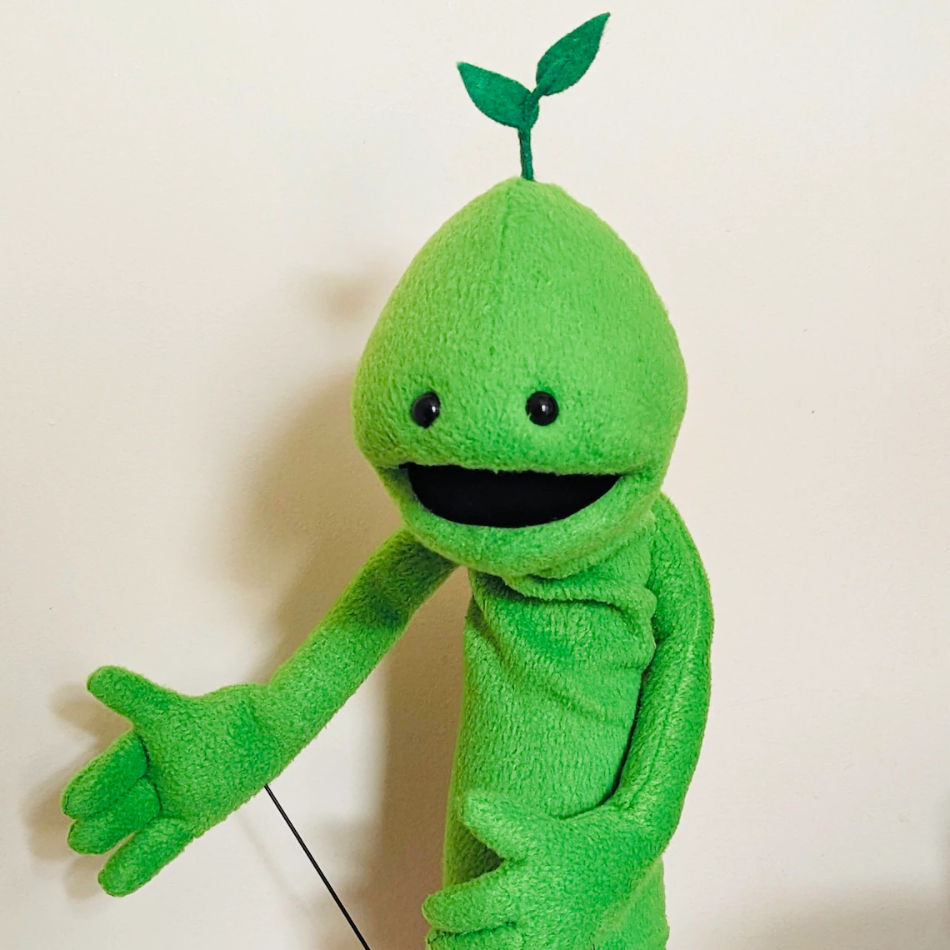
Like glove puppets, rod puppets are controlled from below. The puppeteer uses one hand to hold the main body and uses the other hand to control the arms via rod attachments. These puppets range from a simple development of a hand or glove puppet to a fully jointed one similar to a marionette.
A notable example is Kermit the Frog.
Body puppet

Body puppets involve a large portion or all of the puppeteer's own body enclosed or hidden within the puppet. For large puppets that have four legs, two puppeteers are usually involved to make the movements come to life.
Two notable examples include Big Bird and Mr. Snuffleupagus (both pictured), or Snuffy for short, from Sesame Street.
Bunraku puppet

Bunraku is a traditional Japanese puppet style that dates back to the 1680s. It involves sophisticated mechanical puppets and chanting. A single puppet is operated by three puppeteers, with the most experienced one moving the head and the supporting ones moving puppet's arms and legs. A single chanter will generally sit on a platform and recite the play's text.
Muppet-style puppet

The word "Muppet" is a reference to the unique puppets created by puppeteer Jim Henson and seen in The Muppet Show and Sesame Street. They are characterized by a fluffy, furry or smooth exterior with or without unique clothing and costumes. Live hand, rod and body puppets are generally featured.
This video breaks down the different puppet techniques used in Sesame Street.
Shadow puppet

Shadow puppets are shown in a darkened room and operated behind a translucent screen of fabric or paper. Depending on the design of the puppets, colorful cellophane can be used to enhance and add color and magic into the puppet show. Due to their simplicity, shadow puppets are great for communicating simple stories to a younger audience.
Marionette

A marionette is a full-body puppet that is operated from overhead using a set of strings attached to its individual body parts. To bring the act to life, the control of a marionette is a complex task that requires a skilled puppeteer.


Comments