Influential places that shaped major art movements throughout history
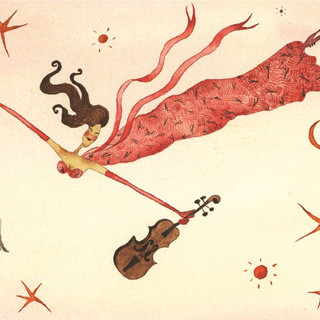

Numerous forms of art are forever associated with a particular place, whether it is because of abundant resources, a unique quirk or a distinctive landscape.
It's incredible to see how these art forms have significantly impacted society, influencing not only local traditions but also future generations. This also reflects changes in society and pushes creative boundaries beyond limits.
To gain insight into how certain places influenced certain art movements, here are some of the key art movements and their meanings.
Between the 14th and 17th centuries, the Renaissance was considered a golden age for art, literature and music. It is also generally viewed as an enlightened age of architecture and art due to a renewed interest in cultural antiquity. This movement emphasized realism, human emotion and perspective. Among the techniques introduced during the Renaissance include chiaroscuro, sfumato and linear perspective. Pivotal artists during the Renaissance include Michelangelo, Leonardo da Vinci and Sandro Botticelli, who produced highly celebrated works of art that continue to have an impact in today's society.
Impressionism (1860s to 1880s)is an art movement and style developed in France during the mid-to-late 19th century. The term originated from a satirical review written by French art critic Louis Leroy concerning the inaugural exhibition Société Anonyme Coopérative des Artistes Peintres, Sculpteurs, Graveurs ("Cooperative and Anonymous Association of Painters, Sculptors and Engravers" in French). In his review, Leroy poked fun at Monet's 1872 painting "Impression, Sunrise." The exhibition was held in the spring of 1874 and consisted of works from over 30 Impressionist artists, marking the official start of the art movement. Paintings are distinguished by loose brushstrokes, vivid colors and the depiction of fleeting moments of light and everyday life. This is why Impressionists often painted outdoors, or plein air. Impressionist artists include Claude Monet, Edgar Degas and Camille Pissarro.
The Expressionist (1905 to 1920s) art movement originated in Germany in the early 20th century, which sought to convey inner emotions rather than reflecting reality on a canvas. Characteristics of Expressionist paintings include energetic brushstrokes and bright, emotionally charged colors. Expressionist artists include Emil Nolde, Egon Schiele and Max Beckmann.
Cubism (1907 to 1920s) is an avant-garde art movement that originated in Paris in the early 20th century. Paintings from this movement are characterized by traditional figures or objects broken down into geometric shapes. In addition, they were created with dark, tight lines, resulting in an abstract composition. Cubist artists include Pablo Picasso and Georges Braque, who questioned traditional artistic aesthetics in pursuit of an appearance that expressed movement, depth and volume.
Surrealism (1920s to 1940s) is an art movement and style that aimed to explore the unconscious mind and the dream world. In other words, this is a push and pull between the fantasy world and reality. Through their work, artists often created works that merged a realistic style with a fantastical subject matter. They also aimed to challenge perceptions and question reality through their artwork. Key Surrealist artists include Rene Magritte, Salvador Dali and Max Ernst.
Abstract Expressionism (1940s to 1960s) marked the first major art movement in America that started after World War II. This style aimed to express universal human experiences through abstract, often large-scale works, while rejecting traditional forms. It also contributed to shaping contemporary art and redefining creativity by emphasizing process over product. Abstract Expressionist artists include Jackson Pollock, Clyfford Still, Willem de Kooning and Mark Rothko.
Since the 1980s, Street Art gained prominence in urban spaces, transforming them into canvasses for artistic expression. This movement encompasses graffiti, installations and murals, often carrying political and social messages.

Now that we have a general idea about some major art movements, let's talk about the places that have greatly shaped these movements, including those not mentioned before.
Paris has long been regarded as the European capital of the art scene and has been home to several major art movements. This includes Impressionism, Cubism and Surrealism. In fact, it is difficult to imagine Paris without any modern art at all. Paris was the venue for six world exhibitions in 1855, 1867, 1878, 1889, 1900 and 1937. The Rococo art movement emerged in the 17th century from the Baroque period. By the second half off the 19th century and the early 20th century, Paris experienced a revolution in the art scene. All in all, the city not only inspired artists of past centuries, but also the artists of today.
The Renaissance period had a profound impact in Europe, especially in Italy. Rome and Florence are two examples of major places influenced by the Renaissance. This is because it marked a period of renewal that sparked a newfound awareness of nature, humanity and even our interactions with others. Iconic artwork during this period include Da Vinci's "Mona Lisa," Michelangelo's Sistine Chapel Ceiling fresco paintings (which includes "The Creation of Adam"), Sandro Botticelli's "The Birth of Venus" and Michelangelo's renowned "David" statue. As artists moved away from religious forms in their artwork, there was a focus on realism and naturalism, featuring secular themes than before.
During the Renaissance, glasshouses all over Europe produced glass for daily use. In Venice, the art of luxury glassmaking was revived during that time. Venice came to be renowned for its blown glass art, a craft that has been handed down through generations for more than 700 years. During the medieval period, glassblowers in Venice formed tightly regulated guilds. Only individuals who had completed a rigorous apprenticeship and demonstrated their skill and proficiency were allowed to become full members. This helped to ensure that the skills, techniques and quality of Venetian blown glass art remained consistently exceptional. Among the techniques that are characteristic in Venetian glass include filigree, latticino, murrine and enamel painting.
Murano glass was a type of Venetian glass that was exclusively crafted on the island of Murano and is characterized by intricate designs and eye-popping colors.
Berlin emerged as a center of tumultuous history, as well as a major center for 21st-century contemporary arts. Expressionism was especially prominent in Berlin and its art scene is characterized as edgy, experimental and raw. A prominent example is the East Side Gallery, a long-standing section of the Berlin Wall, which is now one of the world's largest open-air galleries. It features over 100 murals painted by artists from all over the world.
In Switzerland, particularly Zurich, Dadaism emerged in the aftermath of World War I in 1916. A group of artists, consisting of Hugo Ball, Tristan Tzara, and Marcel Janco, started creating artwork that was designed to be nonsensical and absurd. Essentially, these artists rejected conventional art forms and aimed to create a new style free from constraints and cultural conventions. An iconic example is Marcel Duchamp's 1917 "Fountain," which consisted of a porcelain urinal with R. Mutt's signature. While this art movement was short-lived, it had a profound impact on other movements, including Pop Art.
A pioneering art movement emerged in Japan, especially Tokyo, in the mid-1960s. This was known as Mono-ha (or "school of things" in Japanese) and the artists involved explored materials and their properties as a response to what they saw as relentless development and industrialization in Japan.
New York City is considered an energetic powerhouse in the art world. It has been the forefront of major art movements, such as Abstract Expressionism and Pop Art. In addition, New York City is considered as the American capital of art. Street art continues to be prevalent in this city, where the streets have long been a place for artistic and political expression. Major art museums include the Metropolitan Museum of Art (The Met), Guggenheim and the Museum of Modern Art (MoMA).
Since the start of the 20th century, artists from Mexico City were encouraged by government officials to paint colossal murals. Following the Mexican Revolution, the Mexican Muralist movement arose as a way to not only to make Mexico City beautiful, but also to celebrate its identity and revolutionary ideals. Diego Rivera, Jose Clemente Orozco and David Alfaro Siqueiros led this art movement to create monumental public works to express complex ideas related to Mexico. To this day, Mexican artists continue to use this art form to promote dialogue about Mexican identity, politics and history.
Skagen, Denmark, provides an example of how the geography of a lesser-known place influences artistic creativity in different ways. It is located in the northern tip of Denmark, where two seas meet, thus creating a light that captivated the Skagen painters. They gathered each summer in this quaint fishing village from the early 1870s to the turn of the 20th century. This lesser-known art movement was influenced by Impressionism and Realism, focusing on the scenes of everyday life while shifting attention away from the city to a simpler way of life. Subjects varied from children playing at the water's edge to the festive events in the colony, all thanks to its sea, light and natural beauty.


Comments