Breaking barriers: the rise of female conductors in orchestras
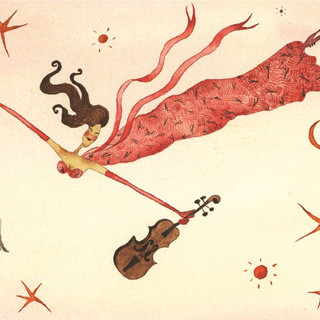

One of the most outstanding trends we have seen over the past 30 years is the strides that women have made in many sectors, ranging from political to social rights.
This progress also extends to the music industry. Now, a group of women could be on the brink of breaking the glass in one the most traditionally homogenous areas of music: the world of orchestral conducting.
However, there has been resistance to the idea that a woman could hold the prestigious role of music director or principal conductor in a major orchestra. So, the million-dollar question is, "Why do women only account for a small percentage of the world's leading orchestra conductors?"
While female conductors represent a defining change in classical music, there is still a lot of work to be done. Furthermore, a significant disparity persists at the elite level and women continue to be underrepresented in leading positions in music.
According to Classical Music from BBC Music Magazine, only 11.2% of conductors represented by artist managements were women. That figure doubled since 2017, when it was only 5.5%. As BBC Music Magazine also points out, women are more likely to lead a G7 nation or a four-star officer in the U.S. military than a major American orchestra.
Based on the 2025-2026 Conductors Report by the Women's Philharmonic Advocacy, a total of 156 conductors directed concerts, 34 (21.8%) of which were women.

Historically, conducting was viewed as a job that was traditionally reserved for men. Not only were women discouraged from getting on the podium, but conducting came to be associated with primarily masculine virtues, such as power, dominance and control.
Between the 19th and 20th centuries, gender roles and societal norms dictated that women belonged in the home and not on the concert stage. Since orchestras were male-dominated at the time, women who pursued music, especially as instrumentalists, often faced obstacles.
Gradually, women began breaking barriers into professional orchestras. Female musicians, such as flutists and harpists, started to join orchestras in small numbers.
The persistence of stereotypes, as well as views of traditional gender roles, often contribute to the underrepresentation of women in orchestra positions. For example, there is a stereotype that men are naturally better leaders, especially in the world of classical music. As a result, women conductors face more scrutiny since this role is highly visible.
Women frequently have to work extra hard to demonstrate their competence and worth, and earn the respect of their colleagues and audiences.

Among the well-known contemporary trailblazers is Marin Alsop. She made history as the first woman to direct a major American symphony orchestra. Her journey went from playing the violin at nine years old who had a dream to be a conductor, to attending the Juilliard School, to assembling her own all-female string orchestra, to eventually becoming the music director of the Baltimore Symphony Orchestra in 2007.
Some women conductors who hold, or recently held, music directorships and principal conductor positions include:
Xian Zhang: currently the music director of the New Jersey Symphony Orchestra and the music director-designate of the Seattle Symphony.
JoAnn Falletta: music director of the Buffalo Philharmonic since 1998 and has conducted several top American orchestras.
Alondra de la Parra: founded the Philharmonic Orchestra of the Americas at age 23 and previously held the role of music director of the Queensland Symphony Orchestra.
Simone Young: currently the chief conductor of the Sydney Symphony Orchestra and previously served as the artistic director of the Hamburg State Opera and the chief music director of the Hamburg Philharmonic from 2005 to 2015.
Sian Edwards: became the first female conductor to direct a performance at the Royal Opera House in London.
Gisèle Ben-Dor: Uruguayan-born conductor who is currently the conductor laureate of the Santa Barbara Symphony and has won praise for her performances of South American works.
Odaline de la Martinez: first woman to conduct at the BBC Proms and founder of the Lontano Chamber Orchestra, the European Women’s Orchestra, and the London Festival of American Music.
Jane Glover: music director of the Music of the Baroque since 2002 and named Dame Commander of the Order of the British Empire in the 2021 New Year's Honours.
There some movies that bring conductors, particularly women, to the forefront. These include "Tár" (2022), "The Conductor" featuring Marin Alsop (2021), "The Conductor (De Dirigent)" based on Antonia Brico (2018) and "Maestra" (2023). Ranging from biographical dramas to inspiring documentaries, these movies emphasize women in the classical music realm.
In "Tár," Cate Blanchett stars as Lydia Tár, a fictional conductor of a major German orchestra. It details a fictional account of Tár at the pinnacle of her career, as she is preparing for an anticipated book launch and a live performance of Mahler's Fifth Symphony. Over time, her life starts to fall apart in a distinctly contemporary way.
"The Conductor," released in 2021, reveals how Leonard Bernstein's protege, Marin Alsop, broke the glass ceiling to become one of the most renowned conductors of all time. This documentary features archival footage with Bernstein and contains a soundtrack of her various performances.
Another movie, "The Conductor," also referred to as "De Dirigent," is based on a true story of Dutch-born Antonia Brico. It details the difficult journey Brico undertook to become the first woman to conduct a major symphony orchestra in the 1920s while facing intense sexism as she pursued her dream.
"Maestra" is an independent film directed by Maggie Contreras. It tracks five candidates competing for the top prize in La Maestra, a female conducting competiton co-founded in 2019 by French conductor Claire Gibault. It is hosted in Paris every two years.
The increase of female conductors in orchestras signifies a broader shift in talent recognition and what leadership looks like. This also means supporting more inclusive musical world by celebrating diverse voices and creating opportunities for young musicians who aspire to be the next big conductor.


Comments