Iconic buildings and structures around the world

The most iconic buildings around the world serve as a testament to human innovation and capability. Ranging from ancient wonders that have withstood for centuries to modern architectural masterpieces that redefine city skylines, these iconic landmarks tell different stories of the civilizations that built them.
Certain cities, especially New York City and Paris, have more than one iconic building or structure!
We will explore some of the world's most iconic buildings and structures and what makes them truly unique and unforgettable.
Table of Contents
Eiffel Tower

Paris has plenty of iconic sites, such as the Arc de Triomphe, the Louvre, Notre Dame and the Arc de Triomphe. However, the Eiffel Tower stands as the iconic landmark of the capital of France.
Designed by Gustave Eiffel, hence the name, it was built in only two years, a record speed at the time. The Eiffel Tower stands at 1,063 feet tall. It was originally constructed for 1889 World's Fair and was intended to be a permanent structure. Nevertheless, it has become a lasting emblem of Paris today.
Taj Mahal

The Taj Mahal is an immense, ivory-white marble mausoleum located in the city of Agra in northern India. It is situated along the south bank of the Yamuna River. Along both sides of the Taj Mahal are two buildings constructed of red sandstone: an assembly hall and a mosque.
Between 1631 and 1648, Mughal emperor Shah Jahan ordered the construction of the mausoleum in memory of his favorite wife Mumtaz Mahal. According to legend, Mumtaz Mahal bound Shah Jahan with a deathbed wish to build her the most gorgeous mausoleum in her honor.
All in all, the Taj Mahal is considered to be one of the most iconic monuments in the world, as well as a symbol of India's rich history.
It has been a UNESCO World Heritage Site since 1983.
Pyramids of Giza

The Pyramids of Giza is considered a defining symbol of Egypt and one of the most recognizable tourist attractions in the world. In addition, the site gives a reflection on what life was like in ancient Egypt. The pyramid complex is on the Giza Plateau, south of the Egyptian capital Cairo.
In ancient times, the site was considered one of the Seven Wonders of the World.
They consist of three royal tombs that were built for three different pharaohs of the fourth dynasty. The largest of the pyramids, famously called The Great Pyramid, was built for the pharaoh Khufu, the second king. The middle pyramid was built for the fourth king, Khafre. Finally, the last and smallest pyramid to be built was meant for Menkaure, the fifth king.
It was designated a UNESCO World Heritage Site in 1979.
Christ the Redeemer

"Christ the Redeemer," known as "Cristo Redentor" in Portuguese, is among the New Seven Wonders of the World situated in Rio de Janeiro, Brazil. In fact, it is only the fifth largest Jesus statue in the world.
The statue stands at an overall 98 feet tall with the arms spanning at 92 feet tall and sits on a 26-foot tall pedestal. It was designed by Polish-French sculptor Paul Landowski and constructed by Brazilian engineer Heitor da Silva Costa, in collaboration with the French engineer Albert Caquot.
Sydney Opera House

The Sydney Opera House pushed the boundaries of architecture, design and engineering. It was designed by Danish architect Jørn Utzon and opened its doors in 1973. Programming encompasses many different art forms and appeals to diverse audiences globally.
The Opera House is famously known for its sails, which have become an emblem of Sydney and modern Australia as a whole.
The Great Wall of China

The Great Wall of China was one of the most extensive construction projects ever undertaken. It took several centuries for the bulwark, consisting of several fortifications and walls, to be built and it stretches along China's historic northern border.
The wall was built to protect the land and territory from nomadic invaders, but this purpose was ultimately defeated. Still, the Great Wall of China is considered a powerful symbol of endurance and strength in China.
Overall, the wall measures well over 13,000 miles long, stretching from the east seaside to the western desert in northern China.
The Great Wall of China was designated as a UNESCO World Heritage site in 1987.
Mount Rushmore

Mount Rushmore is a tribute to four presidents of the United States: George Washington, Thomas Jefferson, Theodore Roosevelt and Abraham Lincoln. It is part of the Mount Rushmore National Memorial, which also includes the Presidential Trail, the Lincoln Borglum Visitor Center and the Sculptor's Studio.
The sculpture was designed by sculptor Gutzon Borglum and over 400 workers began building Mount Rushmore in 1927. While Borglum passed away before its completion in 1941, his son Lincoln took over and finished the project later that year.
Empire State Building

The Empire State Building is the symbol that represents the spirit of New York City. Currently, it is the fourth tallest building in New York City, the sixth tallest in the United States and the 43rd tallest in the world.
It showcases the magic of its art deco style, characterized by its expansive mural on its lobby ceiling, as well as 23-karat gold stars, gears and sunbursts. To reflect major holidays and celebrations throughout the year, the colors Empire State Building's lighting system change.
Counting the spire and antenna, it stands at 1,454 feet tall. At its top floor, it stands at 1,250 feet tall. All in all, the building consists of 102 floors. Construction of the Empire State Building began in 1930 and was completed 13 months later.
Leaning Tower of Pisa
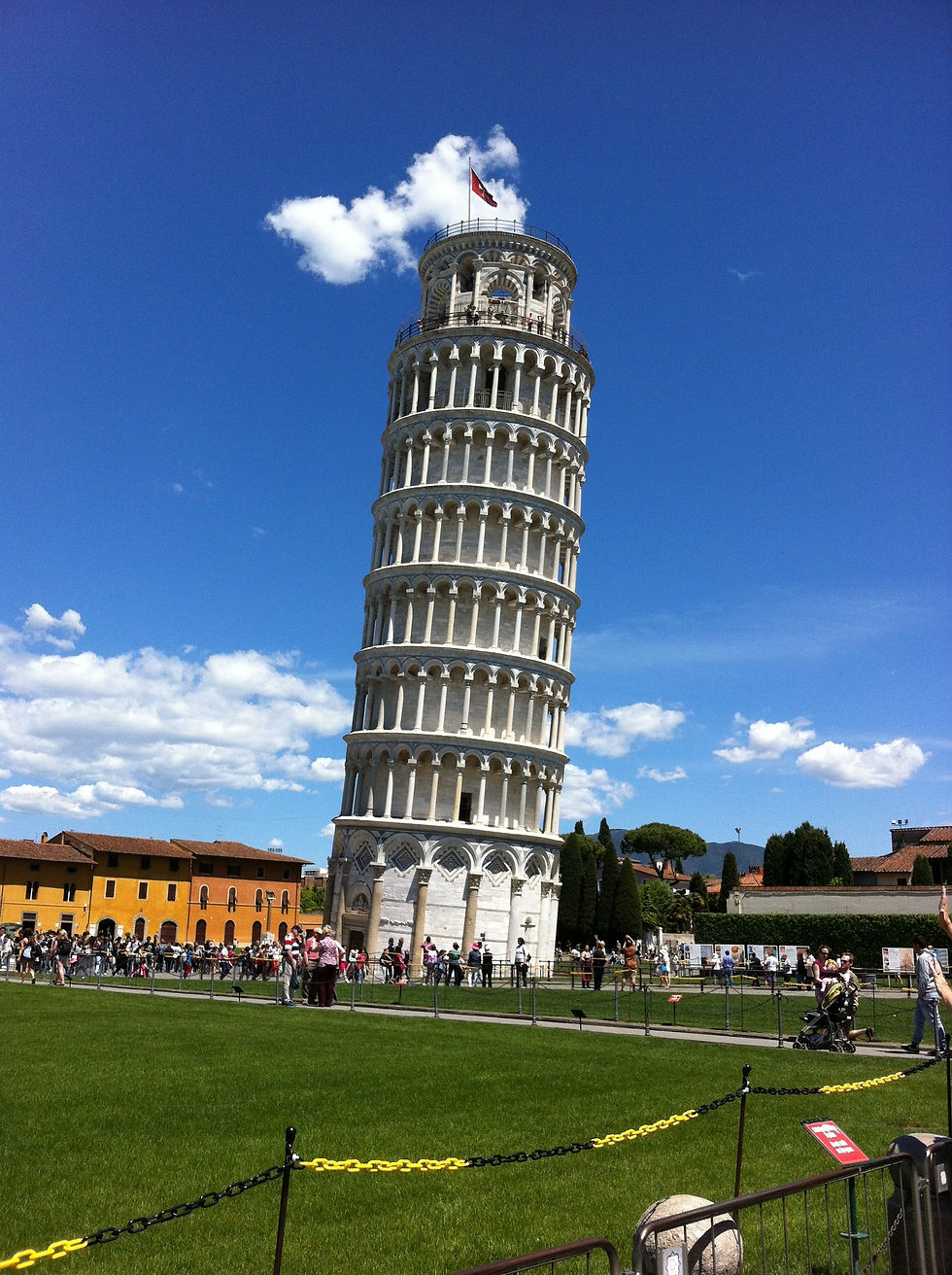
The Leaning Tower of Pisa is famously known for its five-degree tilt due to the settling of its foundations.
It is the bell tower of the Cathedral of Santa Maria Assunta, which is located in the Piazza dei Miracoli, formally known as the Piazza del Duomo. Inside the tower, there are 294 steps, or eight floors total, required to reach the top, where you can see the entire city of Pisa.
Colosseum

Known as the Flavian Amphitheatre, the Colosseum is one of Rome's most iconic landmarks. This structure boasts over 2,000 years of history and welcomes a large number of visitors every year.
Upon completion, it became the largest amphitheater in the world and could seat approximately 50,000. It measures 616 feet long, 511 feet wide and 157 feet tall. Major events included gladiatorial fights, ship naval battles and wild animal hunts.
One World Trade Center

One World Trade center is another iconic New York City skyscraper and a key part of the reconstruction of Ground Zero, the site of the original World Trade Center complex. Currently, it is the tallest building in New York City and in the United States.
Construction began in 2006 and was completed in 2014. Symbolically and formally, One WTC fills the void left by the destruction of the twin towers following the 9/11 attacks.
The Ground Zero complex also includes four more towers, as well as the Perelman Performing Arts Center, the Oculus, the 9/11 Memorial and Museum and Liberty Park. At the top of One WTC is the One World Observatory, which offers some of the most stunning views of NYC, along with tasty cocktails and fine dining.
The White House
The White House is located in Washington, DC. Image by Tomasz Zielonka/Unsplash. (northern facade) Image by David Everett Strickler/Unsplash. (southern facade)
The White House on Pennsylvania Avenue has been the home of every U.S. president, except George Washington, who selected the site in 1791. The first president to live in the White House, which was originally yellow, was John Adams. After James Monroe and his family moved into the building, it was painted white, as it is today.
Theodore Roosevelt designated the nickname for the mansion as the White House, making it the official name.
So far, it is the only private residence of a head of state that is open to the public, free of charge.
Petronas Twin Towers

The Petronas Twin Towers are Kuala Lumpur's crown jewel and are currently the world's tallest twin skyscrapers. They are named after Malaysia's national petroleum company PETRONAS, which occupies one of the towers. The adjacent tower houses various other global companies.
Designed by Cesar Pelli, the towers feature 88 stories and are interconnected by the Skybridge, the highest two-story bridge in the world. The architecture combines contemporary skyscraper design with Islamic motifs, including a distinctive eight-pointed star floor plan that reflects Malaysia's cultural heritage.
Brandenburg Gate

The Brandenburg Gate is one of the most iconic spots in Berlin and should be the first destination for every visitor. It is Berlin's only surviving historical city gate and become a symbol of the Cold War division between East and West, as well as of a reunified Germany following the fall of the Berlin Wall.
Designed by architect Carl Gotthard Langhans, the gate was constructed between 1788 and 1791.
Angkor Wat

Angkor Wat is Cambodia's most iconic temple and makes a great addition to your bucket list if you want to visit Southeast Asia. In fact, it is the largest religious building in the whole world.
The temple is featured on Cambodia's flag, making Angkor Wat and heart and soul of the country. Angkor Wat is located approximately five miles of the Cambodian city of Siem Reap.
Every inch of the complex is covered in intricate carvings and motifs, making it a perfect blend of symmetry.
It was constructed during the 12th century by Suryavarman II. Originally, it was a Hindu temple dedicated to the god Vishnu. By the end of the 12th century, it became a Buddhist site.
In 1992, Angkor Wat was named a UNESCO World Heritage site.
Notre-Dame Cathedral

Notre-Dame Cathedral is celebrated for its breathtaking French Gothic architecture and is dedicated to the Virgin Mary. In addition, it has long been a symbol of Paris and French heritage. It features elaborate stained glass windows, stone carvings and soaring spires, all of which captivate millions of people worldwide.
A fire in April 2019 caused extensive damage to Notre-Dame, resulting in its closure for costly and extensive repairs. The cathedral reopened in December of 2024.
Golden Gate Bridge

The Golden Gate Bridge is a suspension bridge spanning the Golden Gate, a strait that leads to San Francisco Bay. It links the San Francisco peninsula to Marin County to the north. The bridge is a marvelous engineering feat, a masterpiece of art and one of America's iconic symbols. Its most recognizable aspect is its "international orange" color, which provides high visibility in thick fog and beautifully contrasts the blue sky and the Pacific Ocean.
The bridge was designed by Joseph Strauss, Charles Ellis and Leon Moisseiff. Its construction, which involved multiple contractors and subcontractors, took four years to complete. By the time the Golden Gate Bridge opened in 1937, it used to be the longest suspension bridge in the world until it longer and larger bridges were built.
Big Ben (Elizabeth Tower)

Big Ben needs to introduction; it is the most recognizable and iconic landmark in the United Kingdom. A common misconception is that Big Ben is the name of clock tower itself. Technically, it is the bell inside the clock tower, which is named Elizabeth Tower in honor of Queen Elizabeth II.
It is located at the northern end of the Houses of Parliament in Westminster, Central London, adjacent to the River Thames. Big Ben chimes to mark every hour, while the smaller bells chime every 15 minutes to mark each quarter hour. Overall, the clock tower rises at approximately 320 feet.
Brooklyn Bridge

The iconic Brooklyn Bridge connects the boroughs of Lower Manhattan and Brooklyn Heights. In addition, the bridge is renowned for its stone arches and contains five vehicle lanes, an upper-deck pedestrian walkway and a bicycle path.
The design and construction of the bridge was a family affair. John Augustus Roebling designed the Brooklyn Bridge, but passed away early in the project. His son, Washington Roebling, took over as chief engineer, with the help of his wife, Emily Warren Roebling. After nearly 14 years of construction, the Brooklyn Bridge opened in 1883 and was the first steel-wire suspension bridge.
Space Needle

The Space Needle is among the most prominent and frequently photographed landmarks in Seattle. Standing at 605 feet tall, it was built to symbolize humanity's ambitions during the Space Age. It was built as a cultural focal point for the 1962 World's Fair, which showcased the "Age of Space" theme.
At the pinnacle of the landmark is a "top house" resembling a flying saucer, where visitors can enjoy a 360-degree panoramic view of Seattle, both from outside and inside. In addition, visitors can enjoy some cocktails on the iconic rotating glass floor.
CN Tower

As Canada's national icon, the CN Tower is also an important part of Toronto's skyline. It is the center for telecommunications for Toronto, serving more than 17 Canadian television and FM radio stations. In addition, it has observation decks with glass floors offering a 360-degree floor view of Toronto, along with the 360 Restaurant, which offers a rotational view of the city.
Standing at 1,815 feet, the CN was the world's tallest building from its opening in 1976 to 2009, when it was surpassed by Dubai's Burj Khalifa.
Tower Bridge
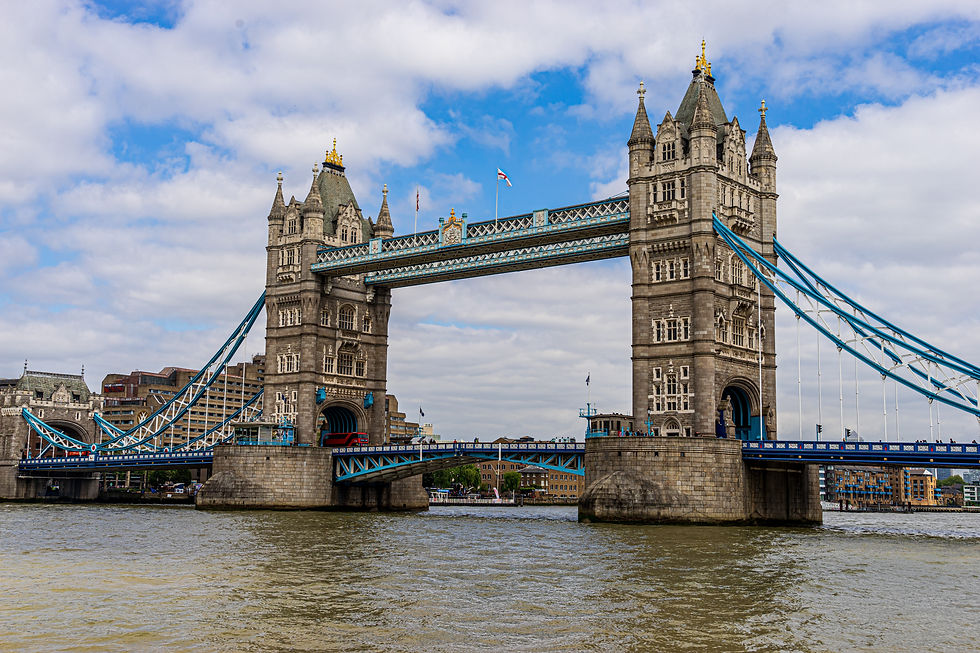
Tower Bridge is another one of London's most iconic landmarks, standing guard over the River Thames and lighting up at night.
The bridge was completed in 1894 and spans approximately 800 feet in length. It also provides an opening that is 250 feet wide. Its twin towers soar 200 feet above the River Thames. Connecting the towers is a pair of glass-covered walkways that are attract numerous tourists.
Stonehenge
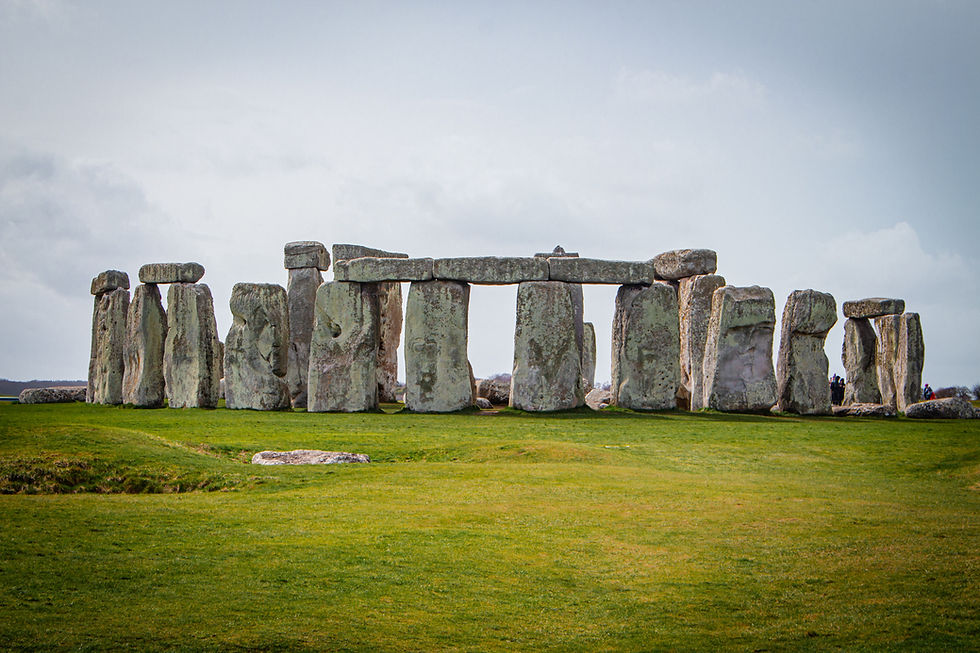
Stonehenge is considered to be one of the most iconic archeological sites in the world. It is also one of the greatest enigmas, as the true origin of Stonehenge remains a mystery because there is no written record of its origin. As a result, the true origin and purpose of Stonehenge has been a subject of debate for thousands of years.
Stonehenge is constructed of larger sarsen (a type of silicified sandstone) and smaller bluestones (a variation of dolomite) arranged in a circular pattern. The stones are believed to be put in place in three main phases from around 3100 BC to 1500 BC.
Nearly a million people visit Stonehenge every year. It has been a UNESCO World Heritage Site since 1986.
La Sagrada Familia

La Sagrada Familia is the world's tallest church building, measuring 566 feet tall. It is a Roman Catholic basilica that has been under construction for over 140 years. It was designed by Catalan architect Antoni Gaudi. Nevertheless, it is one of Barcelona's most visited attractions.
In fact, Gaudi dedicated the rest of his life to the church, moving into La Sagrada Familia until his death in 1926, at which point only a quarter of the project was complete.
Mont-Saint-Michel

Mont-Saint-Michel is a breathtaking tidal island and commune situated in Normandy, France. It is well-known for its Gothic-style Benedictine abbey dedicated to Archangel St. Michel. At high tide, the island is surrounded by water; at low tide, a sandy pathway leads to the village below.
Forbidden City

This architectural wonder consists of nearly a thousand buildings, around ten thousand rooms, surrounded by towering walls and a broad moat. Commissioned by Emperor Zhu Di of the Ming dynasty, the Forbidden City was constructed as part of an ambitious plan to move the capital from Nanjing to Beijing. Its layout includes symmetrical courtyards, gardens, and terraces, embodying traditional Chinese cosmology and aesthetics.
Historically, the Forbidden City was a highly exclusive area and was solely accessible to the emperor, his family and select servants. After the collapse of the Qing Dynasty, the complex was transformed into the Palace Museum in 1925. Today, millions of visitors visit the Forbidden City every year, solidifying its status as a cultural landmark in China's imperial history.
Hagia Sophia

Hagia Sophia stands as one of the world’s most innovative architectural wonders. Located in present-day Istanbul, Turkey, the building reflects a complex history of conversion, both internally and within larger socio-political contexts.
Constructed as an Eastern Orthodox church between 532 and 537 C.E. under the direction of the Byzantine emperor Justinian I. In subsequent centuries, it transformed into a Roman Catholic cathedral, reverted to an Eastern Orthodox church, became a mosque, then a museum and ultimately a mosque again.
Fallingwater

Fallingwater, a house designed in 1935 by renowned architect Frank Lloyd Wright, is among his most acclaimed works. Originally, Wright built Fallingwater as a vacation home for the Kaufmann family, who were the owners of Pennsylvania's largest department store. Since 1964, the house has been open to the public as a museum, attracting more than 6 million visitors annually. This work showcases Wright's philosophy of organic architecture, which blends nature with art.
Museo Soumaya

Museo Soumaya has been one of Mexico City's most iconic museums since opening in 2011. And not just due of its art: The massive silver structure, tiled with thousands of silver hexagons, is one of the striking pieces of architecture in the city. The museum contains more than 60,000 artworks by legendary artists, such as Diego Rivera and Rufino Tamayo.
Chichen Itza

Chichen Itza, which is located on the Yucatan peninsula in Mexico (approximately 120 miles from Cancun), is one of the most visited archaeological sites today. This site provides an in-depth history about the culture and important accomplishments of the Mayan people.
El Castillo, also known as the Pyramid of Kukulcan, is one of the most iconic structures that sits at the center of Chichen Itza. An interesting fact is that El Castillo is actually a Mayan calendar. It has four stairways, with 91 steps each. Add those together plus the top platform and you get 365, the number of days in a year.
Other important ruins include the Caracol observatory, the Temple of the Warriors and the ball court.
It was designated a UNESCO World Heritage site in 1988.
St. Basil's Cathedral

This church resembles a candy confection with its bright colors, dynamic patterns and swirly stripes on the domes. In other words, it resembles icing on a cupcake. The unexpected whimsy design is what makes St. Basil's Cathedral a striking landmark in Moscow's Red Square. Its layout consists of eight chapels surrounding a central church.
Acropolis of Athens

The Acropolis is a rocky hill and natural fortress located high in the heart of Athens. The iconic structure standing on the Acropolis is the Parthenon, a resplendent marble temple that was built to honor the city's patron, the goddess Athena.
Neuschwanstein Castle

With its picturesque and alpine setting, this castle served as an inspiration for Dinsey's Sleeping Beauty's castle. Known “the fairy-tale king,” Ludwig II was so captivated by the mountain landscape that he aimed to create a romantic castle reminiscent of ancient poetry—and he succeeded. Unfortunately, he wouldn’t live to see the castle's completion, because he was found dead in a lake under mysterious circumstances in 1886; the castle wasn’t largely completed until 1892.
Burj Khalifa

The Burj Khalifa is Dubai's iconic skyscraper because it is the world's tallest building. Soaring at 2,722 feet, the building is an achievement in design and engineering that has pushed the limits for skyscraper construction. Its impressive design includes a Y-shaped floor plan with wings that spiral upwards.
The Louvre Glass Pyramid

The Louvre Pyramid is a large glass-and-metal structure that functions as the main entrance to the Louvre Museum in Paris. It is encircled by three smaller pyramids in the main courtyard of the Louvre Palace. It was designed by the Chinese-American architect I.M. Pei, selected by President François Mitterrand.
Arc de Triomphe

The Arc de Triomphe commemorates the soldiers who fought and died in the French Revolutionary and Napoleonic Wars, as well as World War I. Originally, it was built to celebrate Napoleon's victory at Austerlitz in 1806.
Chrysler Building

The Chrysler Building is another one of NYC's most iconic buildings that shapes the iconic Manhattan skyline. Completed in 1930, the skyscraper was designed by architect William Van Alen after being commissioned Chrysler Corporation founder Walter Chrysler in the midst of a major construction boom in New York. All in all, the Chrysler Building is the perfect example of the art deco style, featuring a gleaming stainless steel crown, sunburst windows and car-themed ornaments.
Palace of Versailles

The Palace of Versailles (Château de Versailles in French) reflects both the culture of France and its beauty as a whole. It is located in the city of Versailles, southwest of the French capital of Paris.
What started off as a small hunting lounge, was converted into a stunning and extravagant royal residence and center of government thanks to King Louis XIV.
Perhaps the most famous room in the palace is known as the Hall of Mirrors, consisting of 17 panel mirrors opposite 17 windows that overlook the Versailles gardens. The ornate ceiling is ornated by glass chandeliers and gilded statues border the marble walls.
The palace is considered to be one of the most visited cultural sites today, with nearly 10 million visitors every year. In fact, the beauty of the palace and the gardens are what interest the visitors a lot.
In 1979, the Palace of Versailles was recognized as a UNESCO World Heritage Site.
Cathedral of Brasilia

The Cathedral of Brasilia is a Roman Catholic cathedral and the seat of the Archdiocese of Brasilia. The hyperboloid structure was built from 16 concrete columns weighing 90 tons each. It consists of a stained glass ceiling, a bell tower, a baptistery, and four bronze sculptures symbolizing the four Evangelists. The Cathedral of Brasília was designed by Brazilian architect Oscar Niemeyer and engineered by Brazilian structural engineer Joaquim Cardozo.
Himeji Castle

Himeji Castle, also known as White Heron Castle, is considered to be Japan's most spectacular castle. Unlike many other Japanese castles, it was never destroyed by war, earthquake or fire and remains today as one of the country's twelve original castles. That is why this castle is known for its meticulously preserved castle grounds, as well as its imposing size and beauty.
The Shard

The Shard is one of London's most recognizable skyscrapers, reaching a height over 1,000 feet tall. Designed by Renzo Piano, he said The Shard's design is inspired by London's railway lines. The View from The Shard allows you to have a spectacular view over London, especially Tower Bridge, St. Paul's Cathedral and the River Thames. Visitors can also enjoy a fine dinner at several of The Shard's restaurants, as well as stay at the Shangri-La The Shard.
Buckingham Palace

Since the time of Queen Victoria, Buckingham Palace has been the official royal residence in London. In addition, it is the administrative headquarters of the British monarch. The Changing of Guard takes place at Buckingham Palace on Monday, Wednesday, Friday and Sunday at 11 a.m.
The Kaaba

The Kaaba is a cube-shaped shrine located at the Masjid al-Haram in Mecca, Saudi Arabia. In fact, it is the holiest site in Islam and serves as the focal point for Muslim rituals and prayers. Muslims from around the world aspire to partake in the pilgrimage known as "hajj" at least once in their lifetime. The Masjid al-Haram remains inaccessible to anyone who is not Muslim.
Pantheon

The Pantheon is one of the most iconic buildings in the center of Rome. Its construction began in 27 B.C.E. under the orders of Marcus Agrippa. It is one of the few buildings from Ancient Rome that has remained largely preserved. The Pantheon did not serve as a Catholic church until 608.
Guggenheim Museum, NYC

The Solomon R. Guggenheim Museum, located directly across from Central Park in New York City, is an art museum that showcases contemporary and modern art. Its location helped Frank Lloyd Wright in his effort to express fluidity of organic forms in architecture.
The Gateway Arch

The Gateway Arch is often dubbed "The Gateway to the West" and is the tallest monument in the United States. In 2018, it was officially redesignated from a National Memorial to Gateway Arch National Park. Architect Eero Saarien designed the 630-foot structure in 1948, with construction starting in 1963 and finishing within two years.
Lotus Temple

The Lotus Temple is a Bahá’í house of worship in New Delhi, India. It is renowned for its lotus-shaped structure and consists of nine reflecting pools and gardens, which creates a tranquil and serene atmosphere. Visitors from any faith are welcome to visit the temple to pray and meditate without restrictions.
Dancing House

The Dancing House is a modern building with an unusual shape resembling a dancing couple. It is also known to as "Ginger and Fred," named after the renowned American dancing pair Fred Astaire and Ginger Rogers. The building houses offices, a hotel, and a restaurant. The Dancing House was designed by two architects: Vlado Milunić and Frank Gehry. In addition, it serves as an example of deconstructivist architecture, a postmodern style that highlights incongruity, fragmentation, and asymmetry.
Milwaukee Art Museum

The Milwaukee Art Museum is renowned for its architectural marvel—the movable Burke Brise Soleil, or “wings,” which span 217 feet and open and close twice a day. Designed by Spanish architect and structural engineer Santiago Calatrava, this striking element, along with buildings by Eero Saarinen and David Kahler, makes this museum a distinctive destination.


Comments